
Take the test now
Health and well-being in senior dogs and cats
Take care of their health today to enjoy more moments together.
As animals age, their needs change. A health assessment makes it possible to determine their health status, detect potential issues early on, and tailor their care to each stage of their lives.


Are you worried about your pet’s health?
Find out if your pet needs a veterinary check-up.
Answer a few simple questions about your dog or cat’s health and habits, and find out if a veterinary check-up is recommended.
- It will only take you a few minutes.
- This test is for informational purposes only and does not replace a veterinary assessment.
When is a dog or cat considered a senior?
Each animal ages at its own pace. The senior stage does not begin at the same age for all dogs and cats and can also vary depending on size, breed, and individual characteristics.
Senior and older dogs may require more specific monitoring as they age. In general, larger dogs reach this stage earlier than smaller ones.
In senior cats, age-related changes can also appear gradually. Furthermore, cats tend to hide signs of illness, making veterinary check-ups especially important.
Is your companion entering their senior years?
A review can help you better understand their needs.


An assessment to look after your health
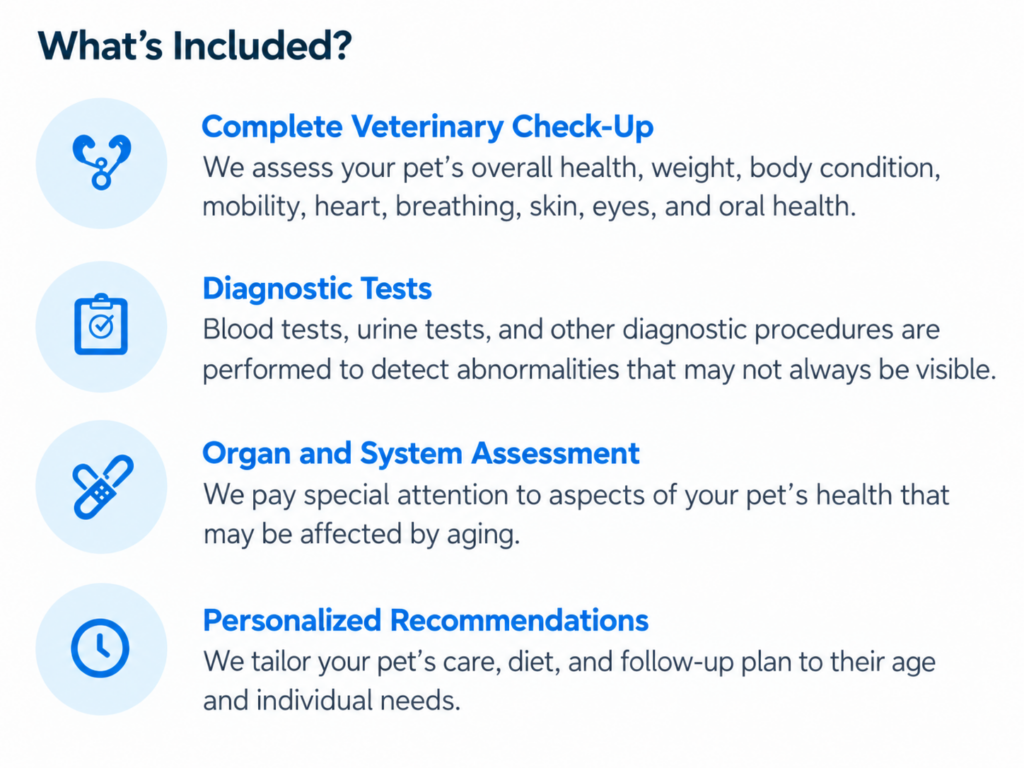
The goal of a veterinary check-up is to assess the animal’s general condition and detect potential changes or health issues before they affect its well-being.
Answer a few simple questions about your dog’s or cat’s health and habits, and find out if a veterinary check-up is recommended.
Common diseases in geriatric pets
Aging can increase the risk of certain diseases. Detecting them early allows for appropriate monitoring and intervention when necessary.
Chronic kidney disease

Diabetes
mellitus

Hyperthyroidism

Senior
Pet Care

Canine osteoarthritis

Feline osteoarthritis

Osteoarthritis in rabbits
Caring for their senior years means caring for all the years left to share.
Aging is not a disease, but it is a stage in which their needs may change.
An assessment allows you to understand their health status, detect potential problems early, and tailor their care to help you maintain their well-being and quality of life.